|
|
此文章由 saiakyo 原创或转贴,不代表本站立场和观点,版权归 oursteps.com.au 和作者 saiakyo 所有!转贴必须注明作者、出处和本声明,并保持内容完整
xiaoyuewanli 发表于 2012-12-12 15:04 
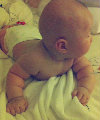
请问大腿纹不对称英文怎么说啊?还有那个什么髋骨。。。
Developmental dysplasia of the hip
有先天, 宫内压迫及后天的原因, 如果出生后用包巾时使劲把宝宝双腿伸直并拢的包起来, 可以造成人为的脱位, 导致髋关节发育不良; 一般六个月前可以用B超, 六个月后骨头长硬了B超看不清楚就只能X-Ray了; 我女儿臀位剖腹产, 儿科医生直接给开了六周B超, 六周时一照觉得髋关节似乎还未成熟, 十二周时又照一次复查后说没事了, 她长肉了以后一直腿纹都不对称, 社区护士在六周前每次检查都提醒一定要去照B超; 愈大治疗效果越差, 不治疗以后能影响走路及早发关节炎
以下从 Better Health Channel 转录:
Developmental dysplasia of the hip (DDH), previously referred to as congenital dislocation of the hip (CDH), means that the hip joint of a newborn baby is dislocated or prone to dislocation. Around 95 per cent of babies born with DDH can be successfully treated.
Approximately one in every 600 girls is affected, compared to just one in 3000 boys. The left hip is affected three times more often than the right hip. Dislocation of both hips is not uncommon. DDH is also more common in babies born with particular disorders, including cerebral palsy and spina bifida. There is a family history of DDH in one third of cases.
Structure of the hip joint
The hip is a ball and socket joint. The femur (thigh bone) ends with a rounded projection, or ball, which fits into the hollowed out socket (acetabulum) of the pelvic girdle. The ball is anchored firmly into the socket with tough connective tissue called ligaments. In a baby with DDH, the socket is abnormally shallow, which prevents a stable fit. Slack ligaments may also allow the femur to slip out of joint.
Symptoms of DDH
The signs and symptoms include:
- Reduced joint mobility
- A low clunking sound can be heard when the leg is gently rotated, which is the sound of the femur engaging the socket
- The stretch of skin between the anus and the genitals (perineum) is unusually wide.
For unilateral dislocation, symptoms include:
-The skin creases of the buttocks don’t match.
-One knee joint looks higher than the other.
Causes of DDH
There are many causes of DDH, both genetic and environmental, including:
Family history - around one third of babies with DDH have a blood relative who also had the condition.
Congenital disorders - DDH is more common in babies with disorders such as cerebral palsy and spina bifida.
Breech delivery - being born feet first can put considerable stress on the baby’s hip joints.
Multiple babies - crowding inside the womb may dislocate the hip.
First-time mother - the inexperienced uterus and vagina may cause a difficult or prolonged delivery.
Routine checks
Babies are routinely checked at birth to make sure their hip joints are properly positioned. The baby is laid on its back, and the doctor rotates each leg at the hip to ensure full joint mobility. A dislocated hip doesn’t have a full range of movement and tends to make a clicking or clunking sound as the ball of the femur moves in and out of the socket. An ultrasound is usually performed to confirm the diagnosis and help determine the extent of the dislocation. X rays, CT scans and magnetic resonance imaging (MRI) scans may also be used.
Treatment for newborns
A baby born with a dislocated hip can be successfully treated with a Pavlik harness. This device holds the joint in place while the baby’s skeleton grows and matures. Subsequent x-rays will track the hip joint’s progress. The Pavlik harness is effective in over 85 per cent of cases. Most babies will require the harness for between six and 12 weeks and do not appear to be distressed by its use.
Older babies
If a baby is diagnosed with a dislocated hip when they are six months old or more, then an anaesthetic will be required before the hip is manipulated into its proper position. An operation may also be needed. A hip cast applied after surgery helps to keep the hip joint in place, and subsequent x-rays will track the hip joint’s progress.
Later diagnosis
Sometimes, a child isn’t diagnosed with DDH until they are two or three years of age. Symptoms may include a distinct waddling gait, one hip lower than the other, a limp, and walking on tiptoe. Complications of untreated DDH in an older child may include stability problems with the knee joints and injury to nerves supplying the femur.
Long-term outlook
Most babies born with successfully treated DDH don’t have any hip problems in later life. However, some may develop arthritis in the affected joint in their later years.
Where to get help
Your doctor
Paediatrician
Maternal and child health nurse
Things to remember
Developmental dysplasia of the hip, or DDH, means that the hip joint of a newborn baby is dislocated or prone to dislocation.
DDH affects one in every 600 girls, and one in every 3000 boys.
Treatment includes special harnesses, or operations and casts, depending on the age of the child at diagnosis.
|
|
 星*--及几张重口味(41#加一张无敌日出) (2013-8-1) Wolongshan
  楼主:巴巴掌


 发表于 2012-12-12 15:49








 我们家的不对称 必须马上看555555.。。。。。。。。。。。。好担心。不过我们才5周大。